|
1
|
|
|
2
|
- Basic principles
- Denotation, meaning and reference
- Semantic categories
- Levels of description
- Semantic phenomena
- Semantic theories
- The syntax/semantics interface
- Computational semantics
|
|
3
|
|
|
4
|
- Mind is innately structured, modular: subparts, particular functions,
domains
- Language module exists
- Lang acq is central puzzle (learnability, innateness, universal grammar)
- Semantics is a formal system (isolatable, describable, autonomous)
- Knowledge of language is modular (phonology, morphology, syntax,
semantics)
- Crosslinguistic semantic regularities exist
|
|
5
|
- Competence (grammaticality, universal properties of language, data)
- Ungrammaticality: “this can’t be a sentence”
- Anomaly: “this sentence doesn’t make sense”
- Colorless green ideas sleep furiously.
- Categories: classes of words that behave similarly
- POS (tags), function/content wrds
- Constituents: word sequences that belong together
- phrases, clauses, sentences
|
|
6
|
- What components of linguistic processing contribute to meaning?
- Characterization of the meaning of (parts of) utterances
(word/phrase/clause/sen-tence)
- To what extent can the meaning be derived (compositionally)? ambiguous?
- Formalisms: networks, models, scripts, schemas, logic(s)
- Non-literal use of language (metaphors, exaggeration, irony, etc.)
|
|
7
|
- Not everybody agrees on the facts
- Accounts are often heterogeneous
- Other related areas are often excluded
- Prosody
- Pragmatics
- Culture
- Historical aspects of language change
- Widely divergent approaches, theories exist
|
|
8
|
|
|
9
|
- Referential (denotational)
- Relating symbols to external objects
- Logic, mathematics, models
- Psychological (mentalist)
- Relating symbols to internal objects
- AI, psycholinguistics, semantic representation
- Pragmatic (social)
- Communication as a social activity
- Interactions, agency, conventions
|
|
10
|
- Meaning via reference
- Configure symbols: characterize relationships between objects
- Linguistic reference
- Proper nouns: individuals
- NP’s
- Individuals (or groups/collections thereof)
- Substances, actions, abstract entities
- But: nonreferentiality
- A/some/every/no student sneezed.
- The man who can lift this stone is stronger than an ox.
|
|
11
|
- Expressions have both:
- a reference: what it means on a given occasion (retinal image,
subjective)
- a sense: ways in which the reference is presented (lens image,
objective)
- Reference: actual real-world objects, individuals, classes (extension)
- U.S. President: {Washington, Clinton, Bush, …}
- Sense: inherent meaning, concepts, thoughts (intension)
- U.S. President: elected leader of the U.S.
|
|
12
|
- Johni saw himj.
- Johni saw himselfi.
- Johni saw him*i/j.
- Johni’s fatherj saw himi.
|
|
13
|
- *Behind [Mary]i [she]i heard the snake.
- *[Herself]i is proud of [her]i.
- *If [that jerk]i calls, tell [Tom]i I’m busy
tonight.
- *[He]i insists that [the electrician]i found
nothing wrong.
- [Mary]i told [John]j that [they]/j/i/k
were assigned clean-up duty.
|
|
14
|
- Syntactic coreference principles (Binding Principles A-C, morphological
features, distance)
- Other methods
- The Hobbs algorithm: ordering of syntactically-derived potential
antecedents from previous utterances
- The centering algorithm: cache of 2-3 previous sentences, stack-based
memory, preference weighting among possible antecedents
|
|
15
|
- Truth value
- Concepts: basic entities
- Properties: attributes predicated of concepts
- Intensity
- Incommensurability
- Events: actions, states, processes
- Propositions: predicated assertions
|
|
16
|
- Literal meaning
- Representation of states of affairs in the world
- Decontextualized as much as possible
- Objective, focused, structured
- The approach we will strive to follow
- Implicational meaning
- What the speaker intended or what the hearer’s expected response is
- Context is crucial to interpretation
- Negotiable, subjective, variable
- Not what our focus will be on
|
|
17
|
- Expressive meaning
- Connotation, emotion, feelings
- Prototypes
- Most popularly evoked exemplars of a given concept
- Stereotypes
- Over-used (often incorrect) exemplars of a given concept
- Evoked meaning
- Dialects (geographical, temporal, social)
- Register (discourse field, tenor, mode)
|
|
18
|
- I am firm.
You are obstinate.
He is a pig-headed fool.
- Fairer sex, female, broad
- Between jobs, out of work, on the dole
|
|
19
|
- Non-compositional collocations
- Severe lexical constraints
- Off his rocker/*rocking chair
- Gnashing of teeth/*molars
- Shot herself in the foot/*toe
- Vary crosslinguistically
|
|
20
|
|
|
21
|
- What nouns traditionally refer to
- Enumerability, discreteness, identifiability
- Fundamental properties:
- Specificity
- Boundedness
- Animacy
- Sex and gender
- Kinship
- Social status
- Physical properties
- Function
|
|
22
|
- Uniqueness, degree of individuation, relative singularity
- Ambiguity
- I eat a hamburger every day.
(specific, non-specific, generic readings)
- Related effects: mood (Spn, Frn, etc.)
- Implies the referent can be uniquely determined
- Interactions
- Given/new status in discourse
- Knownàreferentially
accessibleàspecificà definite
|
|
23
|
- Count vs. mass
- Enumerability vs. amorphousness
- Boundedness
- Is inherent, not derived from the context
- Properties of internal structure:
- Bounded: heterogeneous, unexpandable, replicable
- Unbounded: not
- Ambiguities
- The gas escaped. (un-/bounded)
|
|
24
|
- Animacy: basic biological definition
- In some languages other criteria sometimes apply: topicality, salience,
culture, discourse
- Person: information about participating relevant parties
- 1st: self, selves (I, we)
- 2nd: you (thou, you, y’all, yunz)
- 3rd: others (he, she, it, they, them)
- Further distinctions:
- Singular/plural
- Inclusive/ exclusive distinction
- Distal (distance-based) distinction
|
|
25
|
- Case: marking an entity’s role in a sentence
- Nominative=subject, Accusative=direct object, Dative=indirect object,
Genitive=possession, Instrumental=means, method, Locative=location
- (Russian: stol/stola/stolu/stol/stolom/stolje)
- Varies crosslinguistically (mostly gone in English)
- Physical properties
- Interioricity (solids/outlines), size (large/small)
- Extendedness
- Dimensionality/shape
- Direction, extension: vertical, horizontal
|
|
26
|
- Social status
- Social relations between entities
- Functions in various processes
- Here: focus on morphosyntactic honorifics
- Gender: grammatical category (formal)
- Sex: inherent biological class (semantic)
- Pronominalization
- Subject/object, impersonal/personal, reflexive/reciprocal, etc.
- Functional role: (co)reference, anaphoric, etc.
|
|
27
|
- Semantic particles used when counting N’s
- -bai (time), -bun (part), -chaku (clothing), -choo (beancurd), -dai
(vehicle), -fuku (puff, cup), -hai (cup), -hatsu (ammunition round),
-hen (volume, chapter, …), -hiki (small animal), -hon (cylindrical
object), -ma (room), -shu (poem), -wa (bird), -zen (bowl of rice)
- Usually based on salient properties of the item counted
- Wide variation crosslinguistically
- English has “collective nouns”
|
|
28
|
- Fundamentally relational
- Related properties: gender, age
- Parameters
- Consanguineal / affinal
- Lineal / collateral
- Generation
- Ambiguity
- My grandfather visited me.
(matrilineal, patrilineal)
|
|
29
|
- Relatively temporal relation in conceptual space
- States/conditions of existence, processes, unfoldings
- Actions, executed processes inherently tied to change
- Process: series of states constituting a phenomenon
- Relationality: change is essential to identifying events
- Temporality: time is a crucial element
|
|
30
|
- Stative events
- Internally uniform
- Scope: event as a totality
- More stable temporally, no internal dynamics
- Less sensitive to temporal distinctions
- Nonstatives (acts)
- Heterogeneous, internally structured
- Scope: components
- Substates involve more temporal change, dynamism
- Usually nonpresent tenses
|
|
31
|
- Inchoatives
- Denote interval between two intervals
- Boundary crossing into a new condition
- Can’t distribute to moments
- Resultatives
- Complex event: act + change-of-state
- Not interruptible
- Don’t saturate down to the moment
- Ambiguities
- This shrimp digests easily.
(inchoative middle, resultative active)
|
|
32
|
- Active
- Logical agent realized as structural subject
- Passive
- Logical agent realized obliquely
- Middle
- Structural subject of intransitive is the logical object
- Constraint(s):
- How affected the subject is: anomaly when affectedness is low
- Component of becoming: action must be incohative
- Ambiguity: The door was opened.
|
|
33
|
- Information dealing with temporal (time) properties
- Past, future, present
- Remoteness is specified in some languages
- Not just verbs in some languages
|
|
34
|
- Subclass of acts; verbal=causatives
- Relation of determination between 2 events
- A language universal; usually verbal
- Conveyance (e.g. vehicular: drove, trucked)
- Manner
- knocked, pounded, hammered (intensity, speed, …)
- Cause
- Often inherently encoded
kill à
cause + become + dead
roll à cause + displacement + circular
- Very periphrastic in other languages
|
|
35
|
- Information dealing with how much the verb transfers the action, and to
whom
- Transitive: action is transferred
- Intransitive: action isn’t transferred
- Ditransitive: direct and indirect object
- Causative: some entity is made/caused to do something
- Some verbs alternate
|
|
36
|
- Space is relational: dependency
between 2 entities/events
- Located object, reference object
- Relations can be formalized
- Location: spatial fixedness
- Topological: viewer-independent (coincidence, interiority/exteriority)
- Projective: viewer-dependent (infer-/super-iority, anter-/posteriority,
laterality)
- Ambiguities
- My book is on the table.
(non-/coincedent contact)
|
|
37
|
- Definition(s)
- Nontemporal internal contour of an event
- How an event is distributed through a time frame
- Patterns within an event’s temporal frame
- English usually conflates with tense
|
|
38
|
- Perfectivity
- Perfective: complete, unitized, viewable as single bounded whole,
internal structure less salient
- Imperfective: opposite
- Present tense: rarely perfective
- Slavic languages: verb form dichotomy for imperfective/perfective
|
|
39
|
- Telicity
- Resultative: dual structure (process+result)
- Success predicated on built-in goals
- Necessarily imply previous events
- Processes that exhaust themselves in their consequences
- Durativity
- Durative: necessarily distributed over time
- Punctual: momentary event having no temporal duration
|
|
40
|
- Progressivity
- In progress, on-line, ongoing
- Continuous and extended from a point into a larger interval
- Extending an event from the inside
- Interactions
- w/punctual event: iterative
- Simultaneity, coextensiveness
- Stativizing dynamic events
- Non-permanence, contingency
- Wide linguistic variation
|
|
41
|
- Habituality
- Extends an event from the outside
- Persistence of an event irrespective of time
- Indefinite protraction of an event
- Distribution of an event over several times
- Not just a case of iteration
- Interactions: perfectivity, past tense, conditional
|
|
42
|
- Iterativity
- Semelfactive: one act, event
- Iterative: multiple subevents
- Event cardinality, cyclicity, dual laterality
- Other aspects
- Inceptive (incipient, ingressive)
- Terminative (egressive)
- Prospective (intentive)
- Retrospective
- Intensive
|
|
43
|
- Functions
- Foregrounding, narration: perfective
- Backgrounding, contextual: imperfective
- Ambiguities
- John had eaten the popcorn by 1:00.
(event frame punctuality, reference time punctuality)
- The dog just ran away.
(proximal preterite, modal)
|
|
44
|
- The way an event is explicitly indexed for a time frame
- Event frame: temporally located event
- Tense locus: contextual, temporal reference point
- Ordered relations (distal, proximal)
- Simple (1 event frame) vs. perfect (2 frames)
- Often tense is inherited; ambiguity can result
- The man sitting in that chair was rich.
(relative past, relative present)
|
|
45
|
- Fundamental component to events
- Time line, number line as analogies, descriptive device, model
- Moments
- Subintervals
- Interval
- Saturation
- States è moments
- Acts è
subinterval
|
|
46
|
- Past tense: movement into the completed; bounded, hypothetical,
nonactual, counterfactual events
- Present tense: slightly extended; performatives, in situ narrative,
incompleteness, stativity, genericity
- Future tense: nonactual, hypothetical, inception, prediction, volition,
supposition
- Some languages are tenseless, almost all have only 2 or 3 basic tense
distinctions
|
|
47
|
|
|
48
|
- Concepts (entities, events, etc.) composed of primitive, binary features
- These can be used to classify, distinguish, or identify
- Man vs. girl vs. filly
- [Niece,daughter,sister] vs. [nun,woman,girl]
- [Hen,ewe,cow] vs. [rooster,ram,bull]
- [Table,chair,pencil] vs. [love,thought,idea]
- [Table,chair,pencil] vs. [water,dirt,cream]
|
|
49
|
- Word meaning
- Synonymy: youth/adolescent, filbert/hazelnut
- Antonymy: boy/girl, hot/cold
- Word senses
- Polysemy: 2+ related meanings (bright, deposit)
- Homonymy: 2+ unrelated meanings (bat, file)
- Connotation: set of ideas, emotions evoked
|
|
50
|
- Hypernymy, hyponymy
- Animal ßà dog ßà beagle
- Dog is a hyponym (specialization) of the concept animal
- Animal is a hypernym (generalization) of the concept dog
- Meronymy
- Carburetor <--> engine <--> vehicle
|
|
51
|
- Wide-coverage English dictionary
- Extensive lexical, concept (word sense) inventory
- Syncategorematic information (frames etc.)
- Principled organization
- Hierarchical relations with links between concepts
- Different structures for different parts of speech
- Hand-checked for reliability
- Utility
- Designed to be used with other systems
- Machine-readable database
- Used as a base/standard by many researchers
|
|
52
|
- (noun.Tops)
- noun.act
- noun.animal
- noun.artifact
- noun.attribute
- noun.body
- noun.cognition
- noun.communication
- noun.event
- noun.feeling
- noun.food
- noun.location
- noun.group
- 15 Verb classes
- verb.body
- verb.change
- verb.cognition
- verb.communication
- verb.competition
- verb.consumption
- verb.contact
- verb.creation
- verb.emotion
- verb.motion
- verb.perception
- verb.possession
- verb.social
- verb.stative
- verb.weather
|
|
53
|
- Fuzziness (rich, tall, green, clean)
- Typicality, prototypes
- Lexicalization (snow) (glint, glimmer, glitter, gleam, glisten, glow,
glare)
- Inventories
|
|
54
|
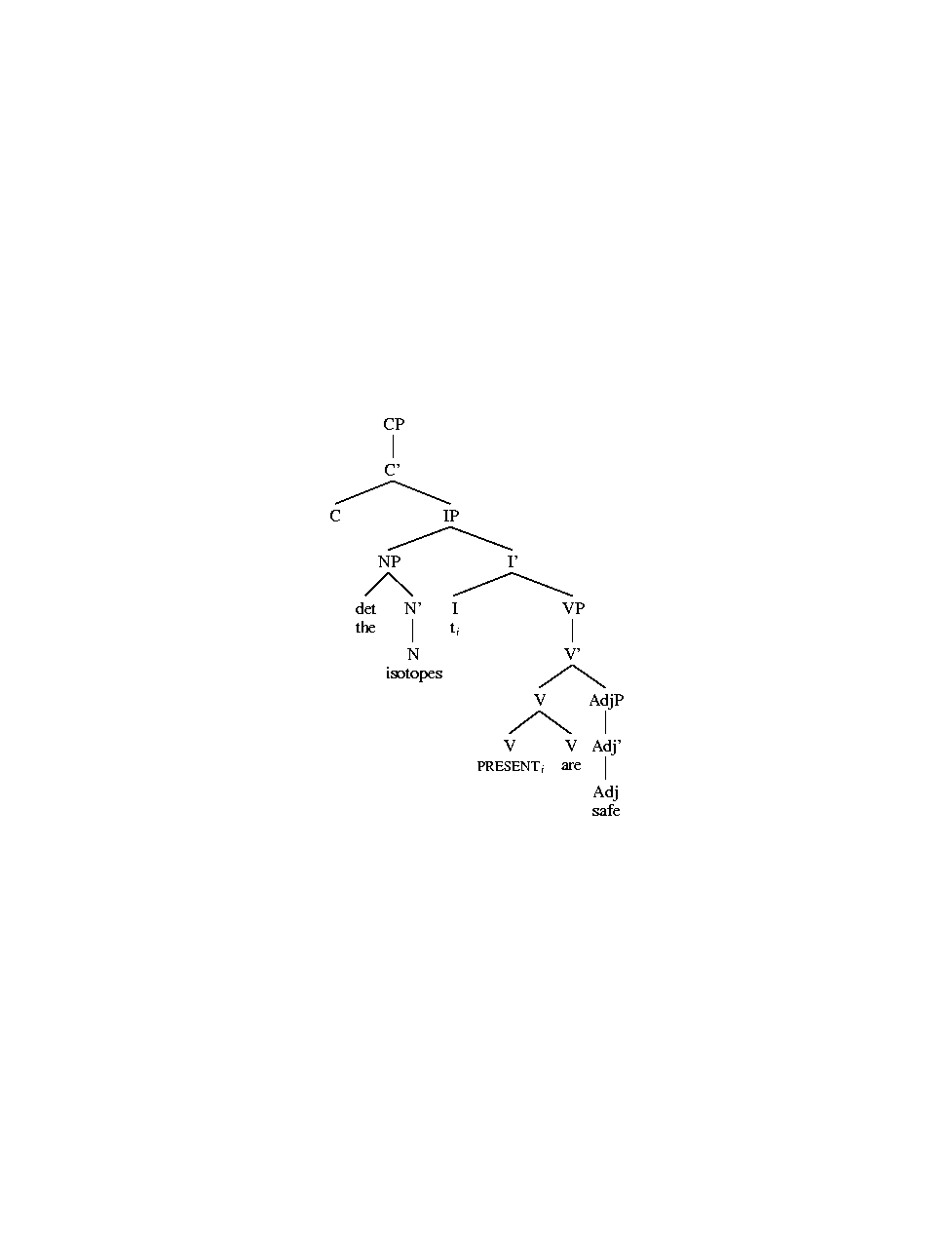
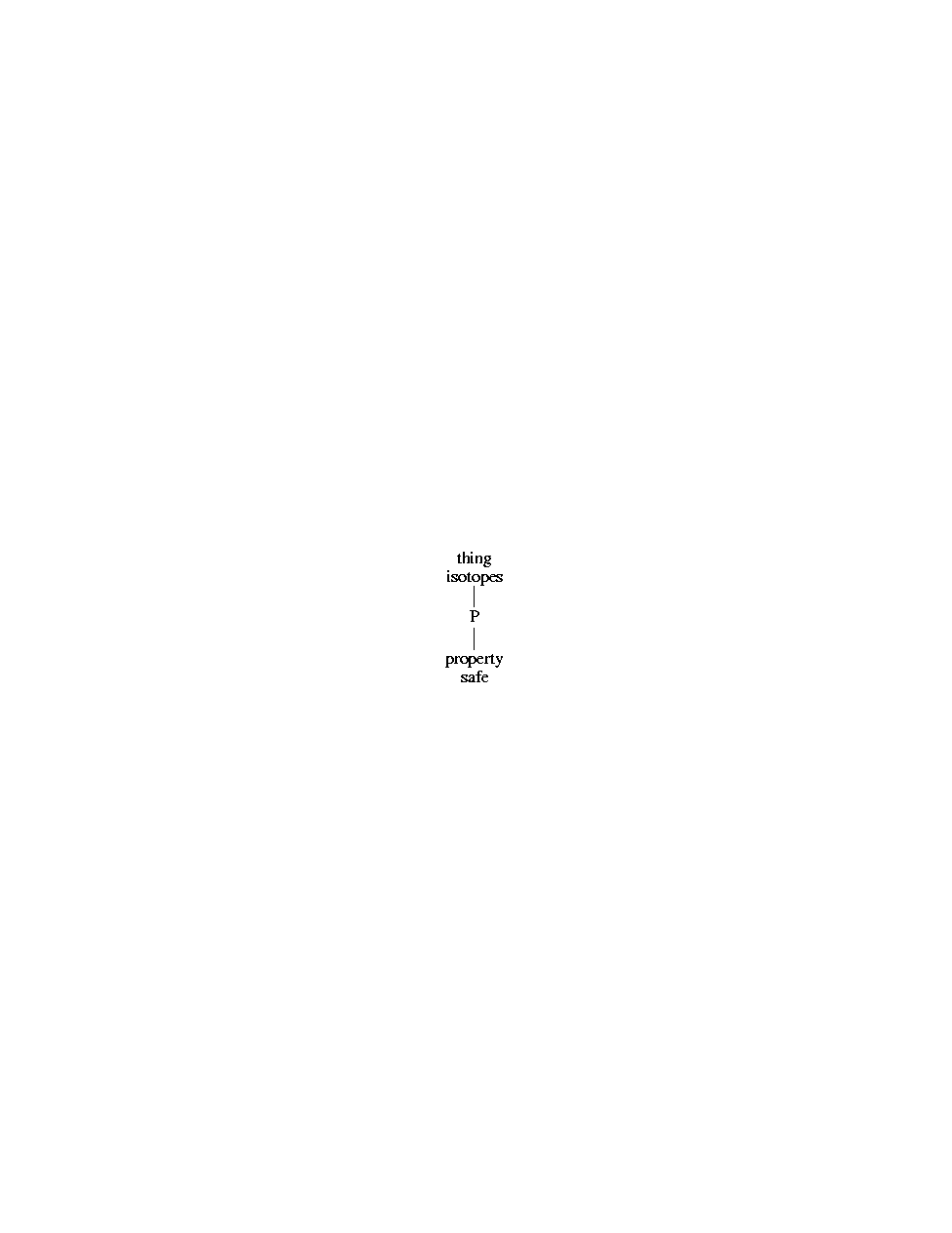
- Associating property with referent
- Copular verb
- Adjectival modifier
- Relative clause
|
|
55
|
- The way basic underlying concepts are lexically realized in a language
- Wide variation crosslinguistically
- English: motion (V) + path (PP) vs. Romance languages
- He swam across the river.
Il traversa la fleuve à la nage
- L1 verb à L2
prepositional phrase
L1 preposition à L2 verb
- Limits exist: “flimped”: kissed someone who is allergic to (e.g. John
flimped garlic.)
|
|
56
|
- Function of constituents wrt basic position
- Assignment
- Verbs assign theta-roles to arguments
- Prepositions assign theta-roles to objects
- Role played by each NP in a sentence
- Agent: entity that performs an action
- Theme, Patient: entity that undergoes an action
- Source, Goal, Location, Path, Instrument
- Experiencer: perceiver of a cognitive stimulus
- Stimulus: perceived cognitive stimulus
- Various theories, various roles
|
|
57
|
- The dog chased the cat up the hill.
|
|
58
|
- Theta criterion
- Relationship with grammar
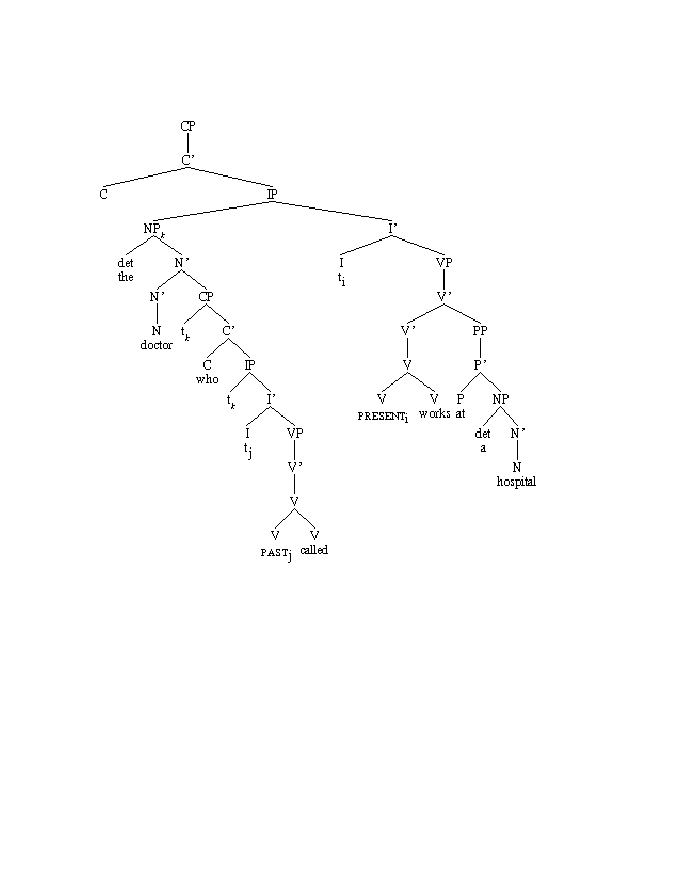
- The syntax/semantics interface (mapping)
- Often direct, sometimes more transparent
- Ambiguity
- The witch made the prince a frog.
- The ducks floated down the river.
- The anthrax was found by the robot.
- I smelled the roses.
|
|
59
|
- Spatial: core meaning is displacement
- Non-stative event structure
- Figure/ground dichotomy
- Displacement
- Source + goal, location
- Path
- Trajectory, reference point (ground)
|
|
60
|
|
|
61
|
- Paraphrase: re-express identical content
- The police chased the burglar.
The burglar was chased by the police.
- I gave the summons to Eric.
I gave Eric the summons.
- Paul bought a car from Sue.
Sue sold a car to Paul.
- It is unfortunate that the team lost. Unfortunately, the team lost.
- The class will begin at 4:00.
At 4:00, the class will begin.
|
|
62
|
- Contradiction: inconsistent, opposites
- John is a bachelor. John is married.
- I am happy. I am not happy.
- Today is Monday. Today is Tuesday.
- Entailment: S1 necessarily implies S2 is true
- The park wardens killed the bear. è The bear is dead.
- Robin is a man. è
Robin is a human.
- Jill and Bill have just gotten married to each other. è Jill and Bill are
spouses.
- David is a Republican. è David is a human.
|
|
63
|
- This is yellow. This is a pencil.
?This is a yellow pencil.
- This is big. This is a whale.
?This is a big whale.
- Lee kissed Kim passionately.
?Lee kissed Kim.
?Kim was kissed.
?Lee touched Kim with her lips.
?Lee married Kim.
?Kim kissed Lee.
?Lee kissed Kim many times.
|
|
64
|
- What types of complements a word requires/allows/forbids
- vanish: ø The book vanished
___.
- prove: NP He proved the
theorem.
- spare: NP NP
- send: NP PP
- proof: CP
- curious: PP or CP
- toward: NP
- Valence, arity, argument structure, frame, adicity
|
|
65
|
- Close synonymy
- Small/little
I have little/*small money.
This is Fred, my big/*large brother.
- Animacy
- My neighbor admires my garden.
*My car admires my garden.
- Bill frightened his dog/*hacksaw.
- Implicit objects in English
|
|
66
|
- Realizing semantic information via grammatical categories
- Morphological information
- Syntactic information
- Phonological information
- Wide variation across languages
- A major focus of this course
|
|
67
|
- More than one meaning possible for:
word/phrase/clause/sentence/utterance
- Lexically, morphologically, syntactically invariant
- Everyone loves somebody.
|
|
68
|
- Lexical ambiguity
- I bought a pen.
- She bought me a fly.
- Morphological ambiguity
- Be careful when drawing these axes.
- Syntactic ambiguity
- I saw old men and women.
- I saw her duck.
- Visiting relatives can be tedious.
|
|
69
|
- Everyone here speaks two languages.
- Three men carried a piano.
- You may not come to my party.
- Judy wants to marry a Norwegian.
- Every professor thinks she is busy.
- A flag was hanging from every balcony.
- Mary can’t sing.
- The witch made the prince a frog.
- John almost walked to the football game.
|
|
70
|
- Factual status of propositional content
- Semantic information associated with speaker’s attitudes/opinions
- Domain/scope: whole expression
- Often overlaps with mood (syntax)
- Various values: necessity, evidentiality, possibility, requirement,
negation
|
|
71
|
- Expressing judgment on the factual status and/or likelihood of a state
of affairs
- Connects the speaker to the proposition
- Possibility/necessity modulated by commitment/evidence
- Truth relativized to a speaker
- 2 basic categories: judgments (speculation, deduction) vs. evidentials
(overtly qualified)
- Gradient of certainty (challenge: beneath, open to, above)
|
|
72
|
- Imposition of a state of affairs on individuals
- Ambiguity
|
|
73
|
- Denying the factual status of parts of a proposition open to challenge
- Propositional/sentential vs.
verbal/phrasal
- Quantifying distance between actuality and nonactuality
- Comment on speaker’s commitment to proposition
- Crosslinguistic properties
- Explicit encoding in some languages
- Finer distinctions in irrealis
- Interactions: tense, aspect, definiteness, etc.
|
|
74
|
- Forms: full/aux verb, affixation, doubling, functional variants
- Scope: wide/narrow, external/internal, sentential/constituent
- Scope can be narrowed: cooccurrence, movement
- Interactions: quantifiers
- Polarity: questions, conditionals, comparison (underlying negation)
|
|
75
|
|
|
76
|
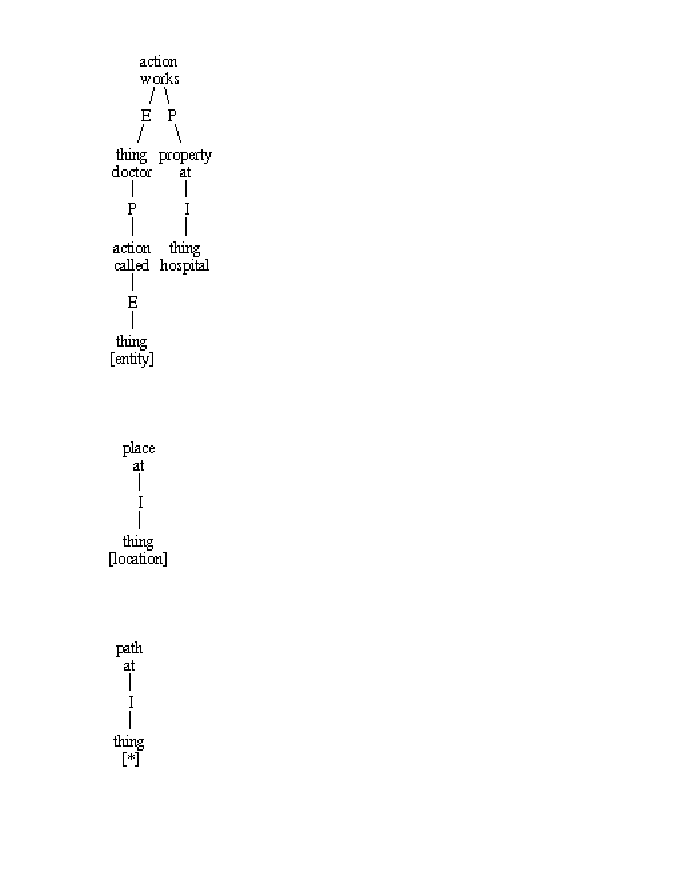
- Representation of lexical semantic info
- Classes: action, process, state, event, property, person, thing
- Causatives, chassé-croisés, other verb-frame alternations
- Translation divergence analysis
- Computer applications (IR, text summarization, MT, etc.)
|
|
77
|
- Very tight coupling of syntax, semantics
- Draws heavily on formal logic principles (proof theory, lambda calculus)
- Coupling morphosyntax and semantics
- Parsing languages with complex morphosyntactic structure (Korean,
Turkish, Amerindian languages)
|
|
78
|
- Developed in USSR in 1960’s, 1970’s
- Focus is on semsyn/morphophon correspondence
- Theme/rheme structure
- Highly mathematical, formalist in nature
- Translation contrastive analysis
- NL generation (template-driven, from data)
|
|
79
|
- Visually, schematically organized
- Used widely, especially for “exotic” languages
- No extensive computational implementation
|
|
80
|
- Grammatical categories reflect temporal stability (moreànoun)
- Cf. events: rapid change in universe
- Relative atemporality is more precise
- Scale of temporal stability
- Abstract nouns almost always derived (e.g. from verbs)
- Non-productivity of adjectives
|
|
81
|
- Philosophical methods for describing entities, relations, events, tense,
aspect
- Formal semantics: using tools (logic, inferencing) to prove meaning in a
formalized, model-theoretic manner
- Explores structural properties, compositionality, interfaces with other
aspects of language
- Derives from math, theorem proving, computation systems
- Widely used in current semantics work
|
|
82
|
- Bottom-up, data-driven, language-oriented approach to semantics
- Literal meaning approach
- Empirical field
- Real-world language examples
- Structure is crucial to analysis
- Study of variation, richness of crosslinguistic semantic phenomena
- Skirts around deep philosophical issues
- Basic realism as a tenet
|
|
83
|
|
|
84
|
- Syntax, semantics are different modules
- They are (somehow) related
- Knowing about one helps knowing about another
- They involve divergent representations
- Both are necessary for a thorough treatment of language
|
|
85
|
- Anaphor
- John walked the dog to a store. It barked.
- Lexical disambiguation
- I saw a cat doze up the neighbor’s lot.
- Ellipsis recovery
- John loves his mother and Jane does ___ too.
- Modality interpretation
- Fred may not come to my party.
- Presupposition
|
|
86
|
- Semantics is interpretive
- Morphology/syntax is prior
- Map meaning from: syntaxèsemantics
- Most current linguistic theories
- Semantics is directly compositional
- Developed in tandem with syntax
- Map meaning while: syntax + semantics
|
|
87
|
- Map:
- NP’s à entities,
individuals
- VP’s à functions
- S’s à T values
- Relate objects in the semantic domain via syntactic relationships
|
|
88
|
|
|
89
|
|
|
90
|
|
|
91
|
|
|
92
|
- Describe semantics as an abstract, observable, formal system
- Develop models of implicit knowledge, cognitive processing, and
linguistic information
- Apply these models in real-world situations
|
|
93
|
- I want to process language no matter how I have to do it. (engineering)
- No intended cognitive plausibility
- Airplanes don’t flap their wings.
- I want to process language just like a human does it. (psycholinguistic)
- Cognitive plausibility
- You can’t be like a human otherwise.
|
|
94
|
- Ways of representing concepts
- Basic entities, actions
- Relationships between them
- Compositionality of meaning
- Some are very formal, some very informal
- Various linguistic theories might involve different representations
|
|
95
|
|
|
96
|
- "Saturday night, Karl
Malone scored 28 points with his hands."
- ((cat clause)
- (tense past)
- (process ((type material)
(effect-type creative) (lex "score")))
- (partic ((agent ((cat
compound-proper)
- (gender masculine)
- (head ((cat person-name)
- (first-name ((lex
"Karl")))
- (last-name ((lex
"Malone")))))))
- (created ((cat measure)
- (quantity ((value 28)))
- (unit ((lex
"point")))))))
- (pred-modif ((instrument ((cat
pp)
- (np ((cat common)
- (number plural)
- (possessor ((cat
personal-pronoun)
- (index
{^5 partic agent index})))
- (head ((lex
"hand")))))))))
- (circum ((time ((cat date)
- (day-name ((lex
"Saturday")))
- (day-part ((lex
"night")))
- (position header)))))))
|
|
97
|
- (H / |possible<latent|
- :DOMAIN (H2 /
|obligatory<necessary|
- :DOMAIN (E / |eat,take
in|
- :AGENT YOU
- :PATIENT (C
/ |poulet|))))
- LATTICE STATS:
- 383 nodes, 1116 arcs, 18755700
paths,
- 54 distinct unigrams, 446
distinct bigrams,
- 2154 distinct trigrams.
- you may have to eat chicken .
- you might have to eat chicken .
- you could have to eat chicken .
- you could be required to eat chicken .
- you may be required to eat chicken .
- you might be required to eat chicken .
- you may have to be eating chicken .
- you might have to be eating chicken
- you could have to be eating chicken .
- you could be obliged to eat chicken .
- you may be obliged to eat chicken .
- you might have to eat a chicken .
- you could have to eat a chicken .
- you may have to eat the chicken .
- you might have to eat the chicken .
- you could have to eat the chicken .
- you could be having to eat chicken .
- you may have to eat the chickens .
- you might have to eat the chickens .
- you could have to eat the chickens .
- you could be required to be eating chicken .
- you may be required to be eating chicken .
- you might be required to be eating chicken .
- Consumptions of an chicken by you could be being requirement .
- That the consumption of the chicken by you was requirements was
possibilities .
|
|
98
|
|
|
99
|
|
|
100
|
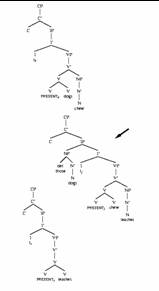
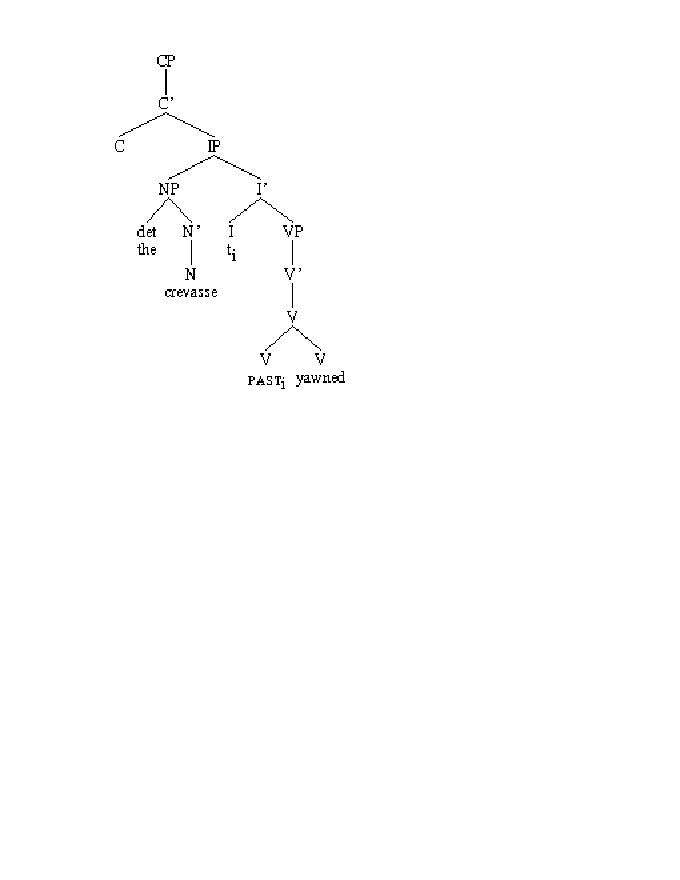
- NL-Soar cognitive modeling system for natural language
- Most complete X-bar model consistent with lexical properties, syntactic
principles
- Non-productive partial structures are later discarded
- Input for semantic processing
|
|
101
|
- Also done on word-by-word basis
- Uses lexical-conceptual structure
- Leverages syntax
- Builds linkages between concepts
- Previous versions used 8 semantic primitives
- Coverage useful but inadequate
- Difficult to encode adequate distinctions
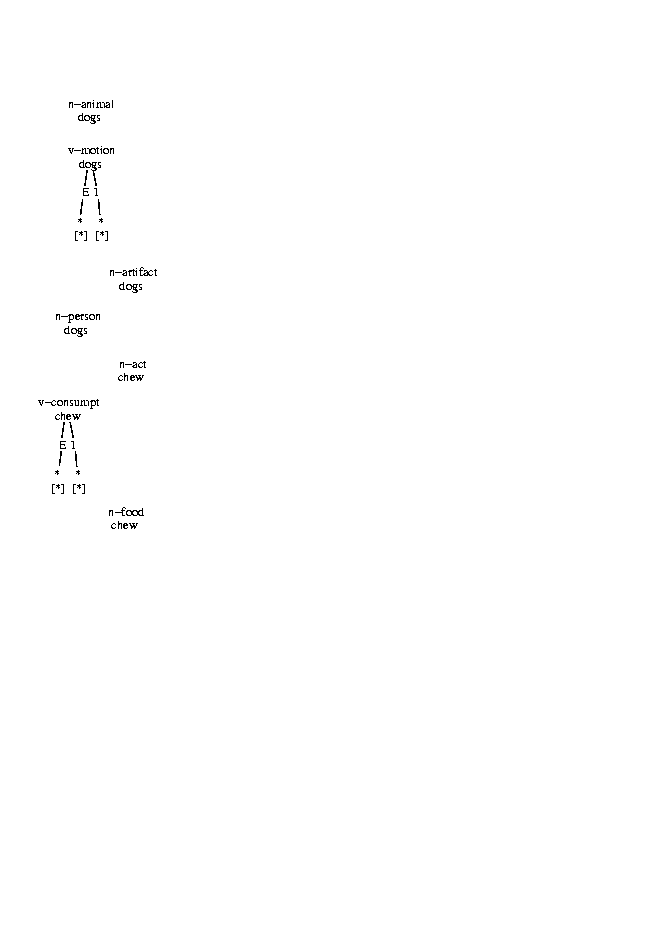
- WordNet lexfile names now used as semantic categories
|
|
102
|
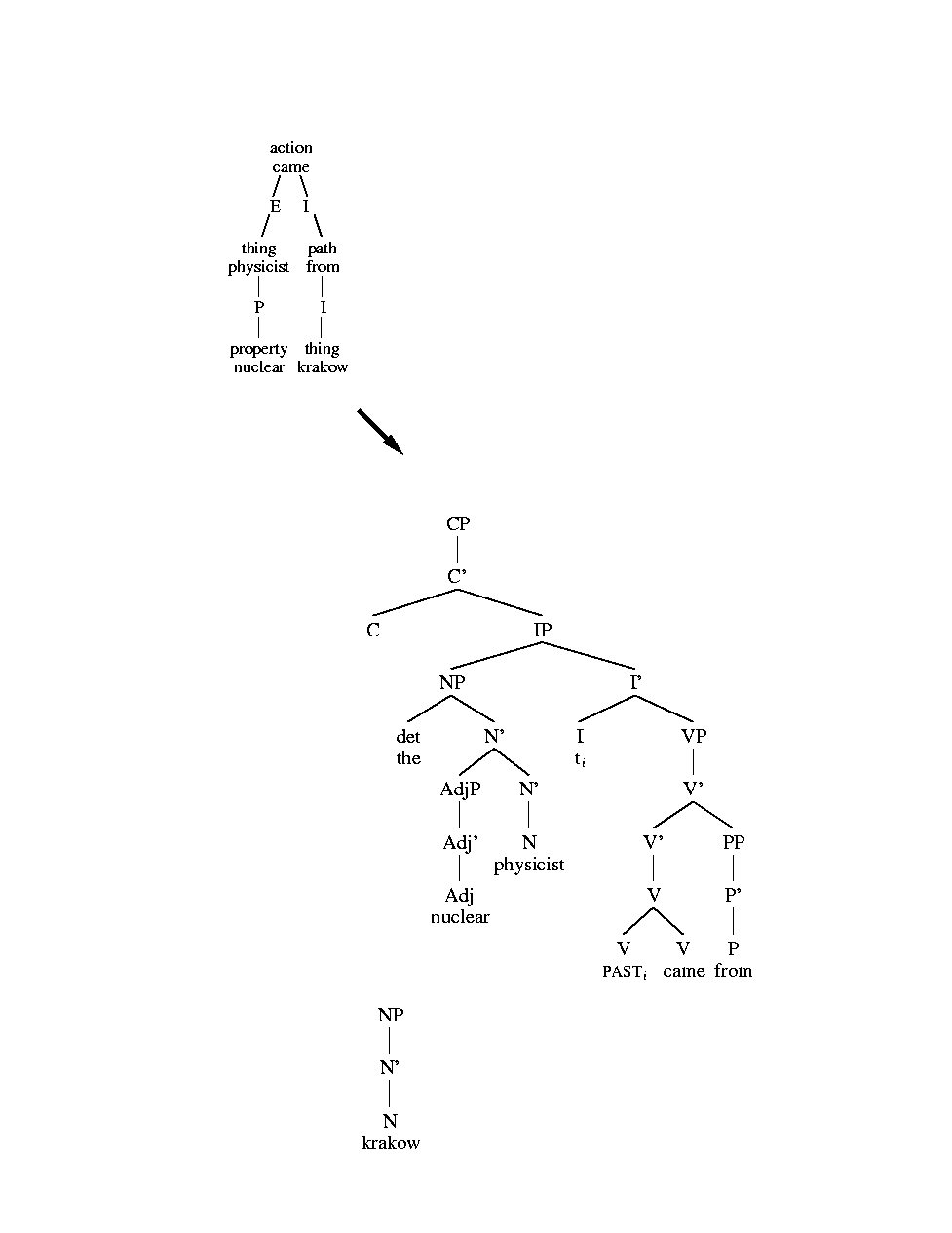
- Pieces of conceptual structure
- Correspond to lexical/phrasal constructions in syntactic model
- Compatible pieces fused together as appropriate
|
|
103
|
- Enforce compatibility of pieces of semantic model
- Reflect limited disambiguation
- Based on semantic classes
- Ensure proper linkages, reject improper ones
- Implemented as preferences for potential attachments
|
|
104
|
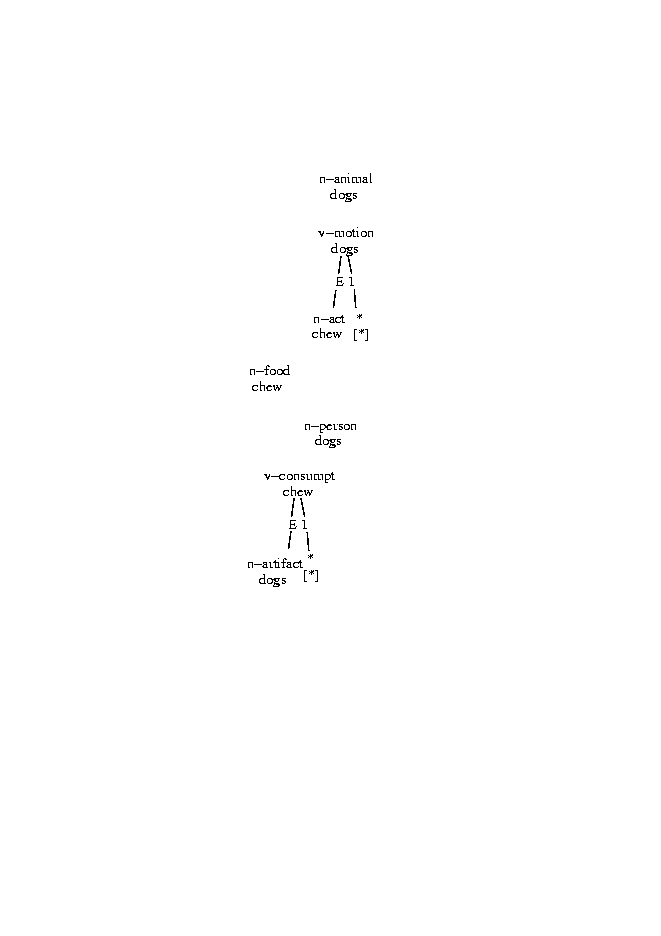
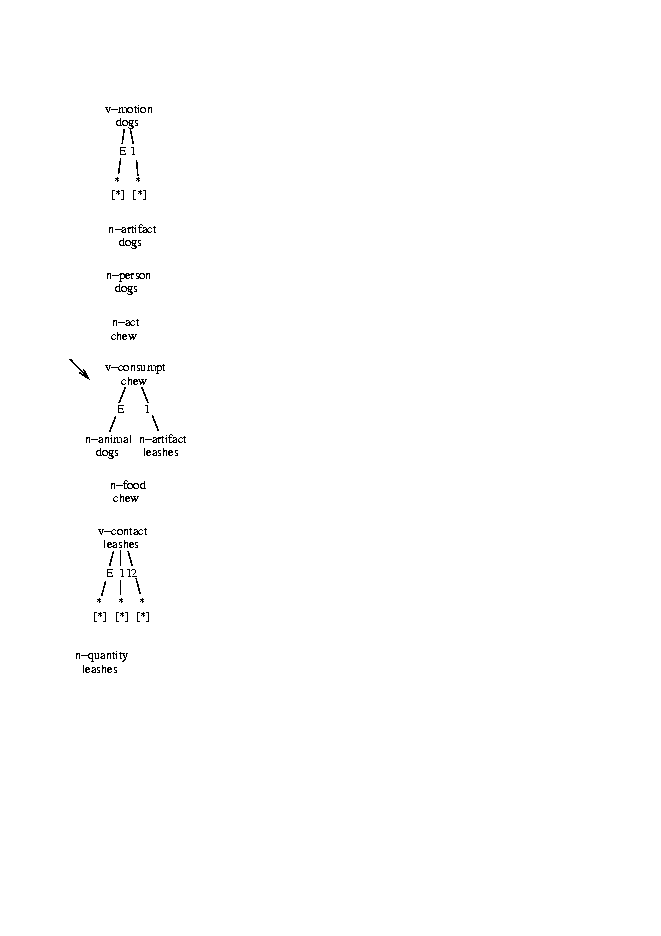
- Most fully connected linkage
- Includes other sem-related properties not illustrated here
- Serves as input for further processing (discourse/dialogue,
extralinguistic task-specific functions, etc.)
|
|
105
|
- Word sense
- Choosing most correct sense for a word in context
- Problem: WordNet senses too narrow (large # of senses)
- Avg. 4.74 for nouns (not a big problem)
- Avg. 8.63; high of 41 senses for verbs (a problem)
- Semantic classes
- Select appropriate WordNet semantic class of word in context
- An easier, more plausible task
|
|
106
|
- Most frequent verbs in class:
- wear, sneeze, yawn, wake up
- (most frequent) Subjects:
- Direct Objects:
- Indirect Objects: none
- Subject Constraint
- sp {top*access*body*external
- (state <g> ^top-state
<ts> ^op <o>)
- (<o> ^name access)
- (<ts> ^sentence
<word>)
- (<word> ^word-id.word-name
<wordname>)
- (<word> ^wndata.vals.sense.lxf v-body)
- -->
- (<word> ^semprofile
<sempro> + &)
- (<sempro> ^category v-body
^annotation verbclass + & ^psense <wordname> ^external
<subject>)
- (<subject> ^category *
- ^semcat n-animal + &
- ^semcat n-person + &
- ^psense * ^internal
*empty*) }
|
|
107
|
- Syntax:
- Semantics:
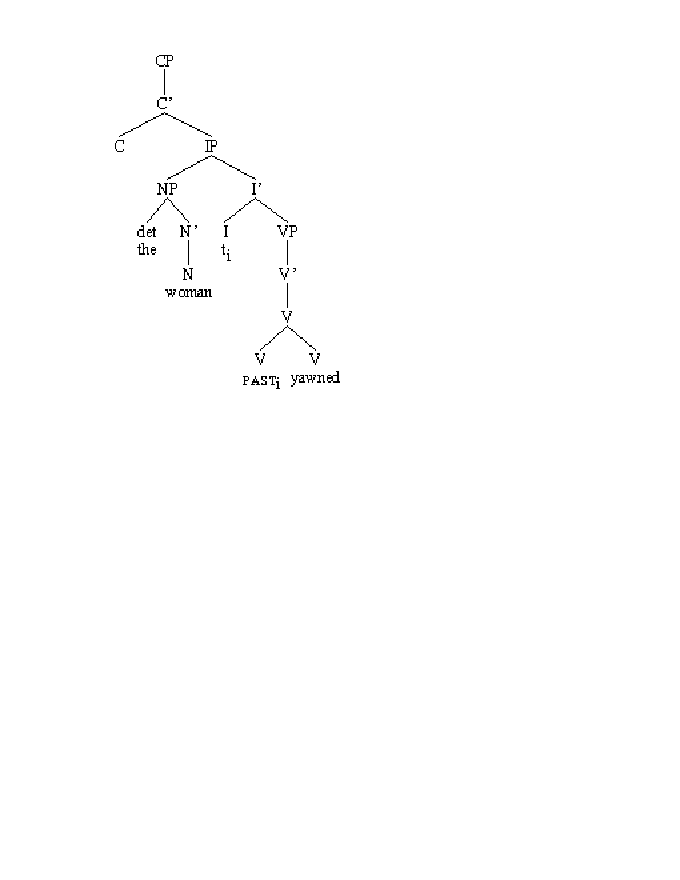
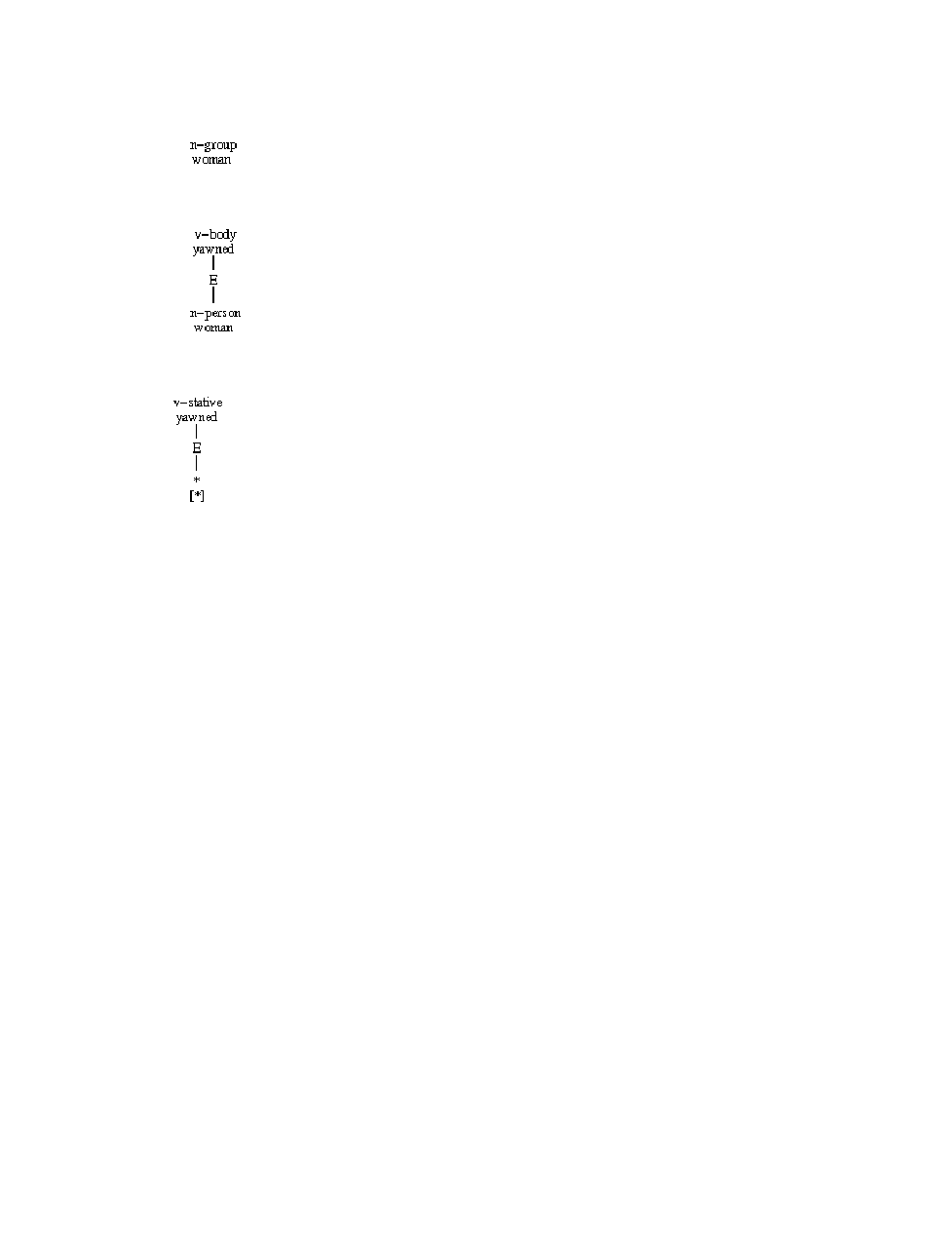
- v-body & n-person match.
- v-stative never tried.
|
|
108
|
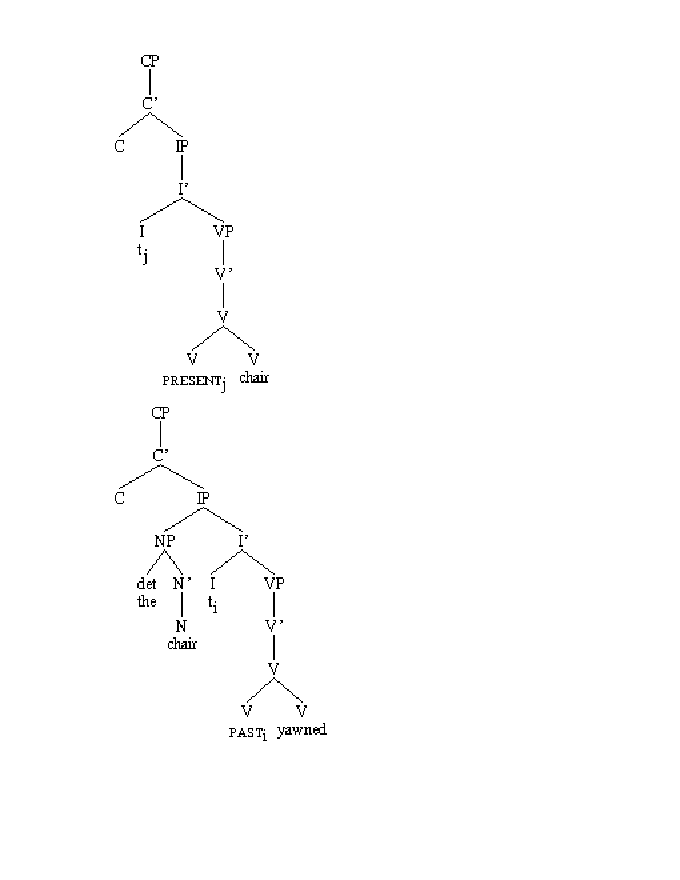
- Syntax:
- chairverb rejected
- chairnoun accepted
- Semantics:
- chairverb senses rejected
- n-artifact incompatible w/ v-body
- n-person accepted
|
|
109
|
|
|
110
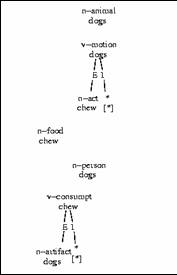
|
|

 Notes
Notes